


Equine light therapy is one of the few animal-health categories where the buyer is often more demanding than the human-market equivalent. A performance yard treating a string of competition horses wants repeatable dosing, equipment that survives barn life, and a supplier who will still be answering the phone in three years. A backyard owner wants something that works on a sore back without a vet visit. Those are different products, and the 2026 market serves both — unevenly.
Key takeaways
- Equine devices fall into four distinct classes — handheld spot units, targeted pads and boots, full-body blankets, and clinic laser systems — with published prices spanning roughly $300 to $15,000.
- Horse coats are the defining engineering constraint: hair and pigment attenuate light substantially, which is why equine devices lean harder on near-infrared (850 nm) than comparable human products.
- Barn durability is not a secondary specification. Dust, moisture, kicks, chewing, temperature swings and repeated flexing destroy consumer-grade construction quickly.
- The equine segment accounts for roughly 14.8% of the pet light therapy device market and is growing at about 10.6% CAGR, with higher willingness to pay than the companion-animal segment.
- SINOCO builds equine blankets, back pads, leg and hoof wraps under ISO 13485 and ISO 9001, with OEM and ODM programmes for equine brands, distributors and veterinary suppliers.

The Four Classes of Equine Light Therapy Equipment
Understanding the category starts with recognising that “equine red light therapy” describes four quite different products with different economics.
| Class | Treated area | Typical published price band | Primary user |
|---|---|---|---|
| Handheld spot device | Roughly 5–20 cm² | $300–$600 | Owners, therapists, targeted work |
| Targeted pad, wrap or boot | 200–900 cm² | $500–$1,500 | Yards treating specific sites regularly |
| Full-body blanket or rug | Whole topline and barrel | $1,500–$3,500 | Competition yards, rehab facilities |
| Clinic laser system | Operator-directed | $3,500–$15,000+ | Veterinary practices, rehabilitation centres |
The price bands overlap with capability in a predictable way, but they are not a quality ranking. A well-built handheld used consistently on a specific tendon will outperform a poorly built blanket used carelessly across a whole horse — the dose that reaches the tissue is what matters, not the size of the device.
Handheld devices
The Photizo Vetcare is the reference product in this class: a handheld unit with 16 LEDs at 635 nm and 850 nm, a treatment area of about 4.7 cm², pre-programmed 30-second dosing cycles, and a typical price around £246 to £296. Its design philosophy is instructive — by fixing the dose per press, it removes operator guesswork entirely, which is exactly the right trade-off for a device sold to non-specialists.
The limitation is equally clear: at under 5 cm² per application, covering a horse’s back or a large area means many repetitions, and consistency depends on the handler. For a hock, a coronet band or a specific wound, that is fine. For a topline, it is impractical.
Targeted pads, wraps and boots
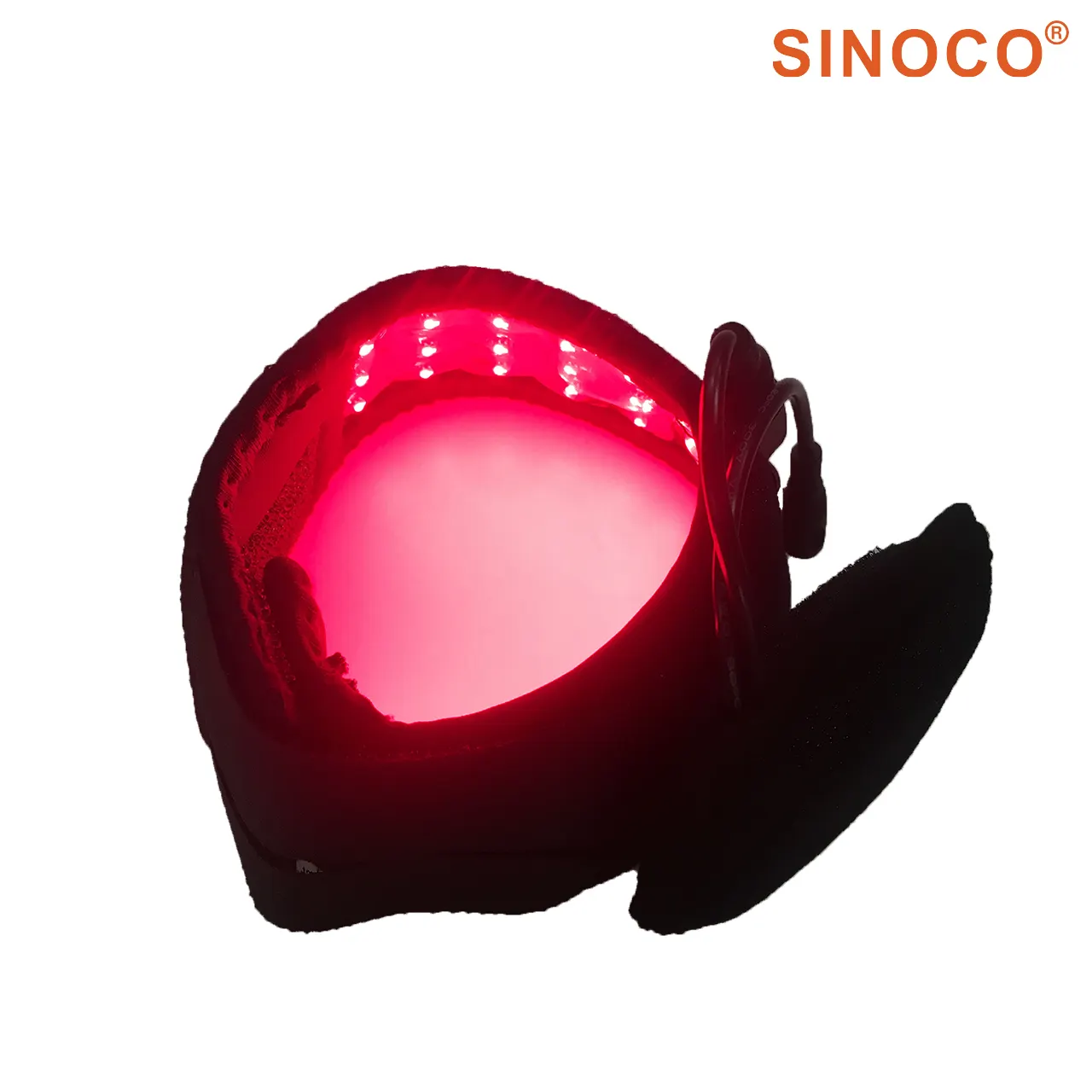
This is where most yards end up. A back pad, hock wrap, tendon boot or hoof wrap delivers a defined dose to a defined region without the operator holding anything. The engineering questions become fit, retention and durability rather than optical design alone: a boot that slips during a session is delivering an unknown dose to an unknown area.

Full-body blankets and rugs
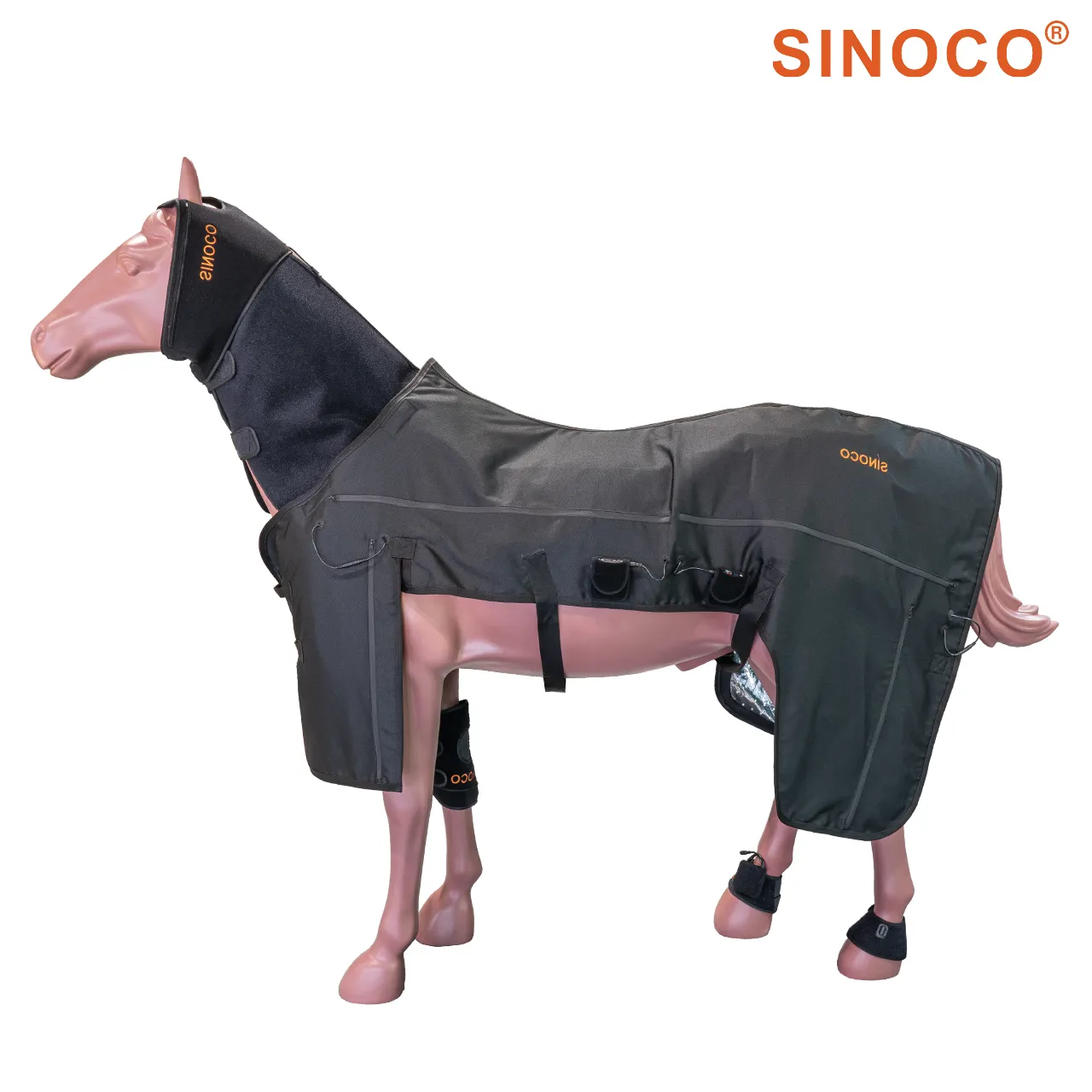
Blankets cover the topline, barrel and hindquarters in a single session. ActivoMed’s professional systems integrate pulsating magnetic coils and massage modules alongside light along the spine from neck to tail and over the hindquarters; RevitaVet’s infrared blanket has built a following among elite competition riders. Equine Light Therapy, sold through Schneiders, has differentiated on repairability — LED pads with a 24-hour repair service, which is a genuinely sensible answer to a product used in a barn.
Blanket buyers should scrutinise three things: the actual emitter layout under the fabric (many blankets have large unlit regions), whether the battery supports an untethered session of the stated length, and how the unit is cleaned after a dusty, sweaty horse has worn it.
Clinic laser systems
Respond Animal Therapeutics, formerly Respond Systems, has over 40 years in the veterinary laser market and sells Class 3b and Class 4 systems to practices. These are a different regulatory and safety category from LED devices: Class 4 lasers require operator training, eye protection for handler and animal, and controlled-area procedures. They belong in clinics, not yards.
| Brand | Format | Positioning |
|---|---|---|
| Photizo Vetcare | Handheld, 16 LEDs at 635 and 850 nm | Pre-programmed dosing, best for small areas and non-specialist users |
| Equine Light Therapy (Schneiders) | LED pads and wraps | Repairable construction with 24-hour repair service |
| RevitaVet | Infrared blanket systems | Elite competition and performance yards |
| ActivoMed | Combined light, magnetic and massage blankets | Professional multi-modality systems |
| Respond Animal Therapeutics | Class 3b and 4 veterinary lasers | Veterinary practices; 40-plus year track record |
| PharmaLight / ModelLight | Professional light therapy systems | Clinic and stable professional use |
Why Equine Devices Are Engineered Differently from Human Ones
The coat problem
This is the single most under-discussed variable in the category. A horse’s coat sits between the emitter and the skin, and hair scatters and absorbs light before it reaches tissue. Coat density varies with season, breed, clipping and management, and dark coats attenuate more than light ones. The practical consequences:
- Near-infrared carries more of the load. Because 850 nm penetrates better than 635–660 nm and is less affected by surface scatter, equine devices generally weight the NIR band more heavily than comparable human products.
- Contact matters more, not less. A device pressed through the coat onto the skin loses far less than one held above it — which is an argument for pads and wraps with proper retention over loosely draped blankets.
- Published irradiance figures assume bare skin. Almost every specification is measured at the emitter, not through a winter coat. Treat stated irradiance as an upper bound.
- Clipping changes the dose. A protocol validated on a clipped horse in summer is not the same protocol in December on an unclipped native pony.
Barn durability
Equipment in a stable environment faces conditions no consumer wellness device is designed for. A specification for equine equipment should explicitly address:
- Ingress protection against dust and washdown, with a stated IP rating rather than a vague “water resistant”.
- Mechanical abuse — kick resistance, chew resistance on straps and cables, and strain relief where cables leave the fabric.
- Flex and fatigue life across the thousands of bend cycles a rug or boot sees in a season.
- Cleanability — whether the unit can be wiped, washed, or has a removable, washable outer, and whether cleaning agents are compatible with the materials.
- Temperature range — barns are not climate-controlled, and lithium batteries behave badly below freezing.
- Field repairability — whether a single dead LED module means a repair or a replacement, which over a five-year life is a significant cost difference.
Safety around animals
Two points that responsible equine suppliers address explicitly. First, eye exposure: LED photobiomodulation devices are generally low-risk, but bright emitters near a horse’s head warrant care, and Class 3b and 4 laser systems require proper eye protection for both handler and animal. Second, scope of use: light therapy is a supportive modality. Acute lameness, suspected fracture, undiagnosed swelling, suspected infection and any neoplastic concern are veterinary matters first. A device that ships without that guidance in its manual is a liability for the brand selling it.
The Equine Market Opportunity in 2026
The pet light therapy device market was estimated at around $67.5 million in 2025 and is projected to reach roughly $148.5 million by 2033, a CAGR of about 10.6%. Within that, the horse segment accounts for approximately 14.8% share and grows at a comparable rate — but with a materially different buyer profile.
- Higher willingness to pay. A competition horse represents a large capital and training investment; equipment that supports recovery is evaluated against that, not against a consumer price anchor.
- Professional intermediaries matter. Equine therapists, farriers, physiotherapists and veterinary practices influence purchase decisions far more than in the companion-animal segment.
- Seasonality and event calendars shape demand, with peaks around competition seasons and in rehabilitation after them.
- Longer product life expectations. Equine buyers expect equipment to last years and to be repairable — a direct contrast to the consumer wellness market’s replacement cycle.
Sourcing an Equine Light Therapy Line
What to specify
An equine product specification should cover everything a human-wellness specification does, plus the animal-specific items:
- Optical — wavelengths and tolerances, weighting between red and near-infrared, emitter layout map, active area, irradiance at contact, uniformity across the pad.
- Anatomical fit — the size range covered, retention method, and how the device stays in position on a moving animal.
- Environmental — IP rating, operating temperature range, chew and kick resistance, cable strain relief.
- Cleaning — validated cleaning procedure and material compatibility.
- Power — battery capacity, session count per charge, charging time, cold-weather behaviour, and whether tethered operation is supported.
- Serviceability — modular emitter panels, spare parts availability, repair turnaround.
- Documentation — electrical safety and photobiological testing, plus a user manual with realistic protocols and clear veterinary-referral language.
- Commercial — MOQ, size-range tooling, sample and production lead times, and packaging for bulky items.
Practical sourcing notes
Two decisions carry disproportionate weight. The first is size range: horses vary enormously, and a blanket line that only fits one size is a line with a narrow addressable market. Establish the size ladder before tooling, because retrofitting sizes later means re-cutting patterns and re-laying emitter maps.
The second is modularity. A product family where one controller and one battery drive a back pad, a hock wrap, a tendon boot and a hoof wrap gives a brand several SKUs from one electronics platform, lowers tooling amortisation, and makes the range far easier for a dealer to stock and support.

How SINOCO Builds Equine Light Therapy Products
SINOCO has been developing and manufacturing LED and red light therapy products for over 20 years, from a 10,000 m² Shenzhen facility certified to ISO 9001, ISO 13485, ISO 14001 and ISO 45001. The horse light therapy range is our largest single product line, covering full-body blankets, back pads, leg and tendon wraps and hoof devices — including equine red light and infrared therapy pads built for daily barn use.
For an OEM or ODM customer, that means wavelength weighting chosen for coat penetration rather than copied from a human product, emitter layouts mapped to equine anatomy, construction specified for barn conditions, and the turnkey process SINOCO runs on every line — drawing and design, material collection, incoming IQC, assembly with AOI, outgoing QC and packing, then shipping and after-sales support.
If you are evaluating the underlying modality rather than the supply chain, our companion guide to equine red light therapy benefits, uses and safety covers the clinical and practical side for horse owners.
Developing an equine light therapy range, or re-sourcing an existing one? Speak to the SINOCO team about emitter layout, size ranges and barn-grade construction, or browse the full horse light therapy range.
Frequently Asked Questions
What wavelengths work best for horses?
Equine devices typically pair red at 635 to 660 nm with near-infrared at 850 nm, and generally weight the near-infrared band more heavily than comparable human products. The reason is the coat: hair scatters and absorbs light before it reaches skin, and 850 nm penetrates better and is less affected by surface scatter than red light.
Does a horse’s coat block red light therapy?
It attenuates it substantially. Coat density, length, pigment and season all affect how much light reaches the skin, and dark coats attenuate more than light ones. This is why pressing a device through the coat into contact with skin matters, why near-infrared is weighted more heavily, and why published irradiance figures should be treated as an upper bound rather than a delivered dose.
How much does equine red light therapy equipment cost?
Published prices in 2026 run roughly $300 to $600 for handheld spot devices, $500 to $1,500 for targeted pads, wraps and boots, $1,500 to $3,500 for full-body blankets, and $3,500 to $15,000 or more for clinic laser systems. Price tracks treated area and build class more closely than it tracks optical quality.
Which is better for a horse, a handheld device or a blanket?
It depends on what is being treated. A handheld delivers a precise dose to a small, specific site such as a hock or coronet band, but covering a topline means many repetitions and depends on operator consistency. A blanket covers large areas hands-free but should be checked for actual emitter coverage, battery endurance and how it is cleaned after use.
Is red light therapy safe for horses?
LED photobiomodulation devices are generally regarded as low-risk when used as directed, but light therapy is a supportive modality rather than a diagnosis or a treatment for acute problems. Acute lameness, suspected fracture, undiagnosed swelling, suspected infection or any neoplastic concern should be assessed by a veterinarian first. Class 3b and Class 4 laser systems are a separate category requiring operator training and eye protection for handler and horse.
What should I look for in a barn-durable device?
A stated IP rating rather than vague water-resistance language, chew-resistant straps and cables with proper strain relief, a defined operating temperature range, a validated cleaning procedure, and field repairability so a single failed emitter module does not mean replacing the whole unit.
How big is the equine light therapy market?
The broader pet light therapy device market was estimated at around $67.5 million in 2025 and is projected to reach roughly $148.5 million by 2033, growing at about 10.6% CAGR. The horse segment accounts for approximately 14.8% of that market, with higher willingness to pay and longer product-life expectations than the companion-animal segment.
What MOQ applies to an OEM equine light therapy product?
It depends heavily on the size range. An existing platform re-branded with your logo and packaging can move in low hundreds of units, while a custom blanket requiring new patterns and emitter layouts across several horse sizes carries higher minimums and longer lead times, because each size is effectively a separate tooling and pattern exercise.
Conclusion
The equine light therapy market rewards suppliers who take the animal-specific engineering seriously — coat attenuation, anatomical fit, retention on a moving horse, and construction that survives a barn. It punishes those who take a human wellness pad, enlarge it, and put a horse on the box.
For brand owners, the strongest position is a modular platform: one validated electronics and optical design driving a family of anatomically specific formats across a real size range, built to be repaired rather than replaced. That is what professional yards buy, and it is what keeps dealers stocking a line year after year.
This article is written for brand, distribution and veterinary procurement teams. It is not veterinary advice. Any concern about a horse’s health should be assessed by a qualified veterinarian.