


Walk through the skincare device section of any beauty retailer, and you’ll see the same pattern repeating: masks, panels, and wands, all lit up in red, blue, or a rotating rainbow of colors, all claiming to rejuvenate, tighten, clear, or brighten skin. The colors look almost identical from product to product. The actual engineering behind them — and the results people get — often isn’t.
LED Skin Therapy Light: Complete Buyer’s Guide | SinocoTherapy
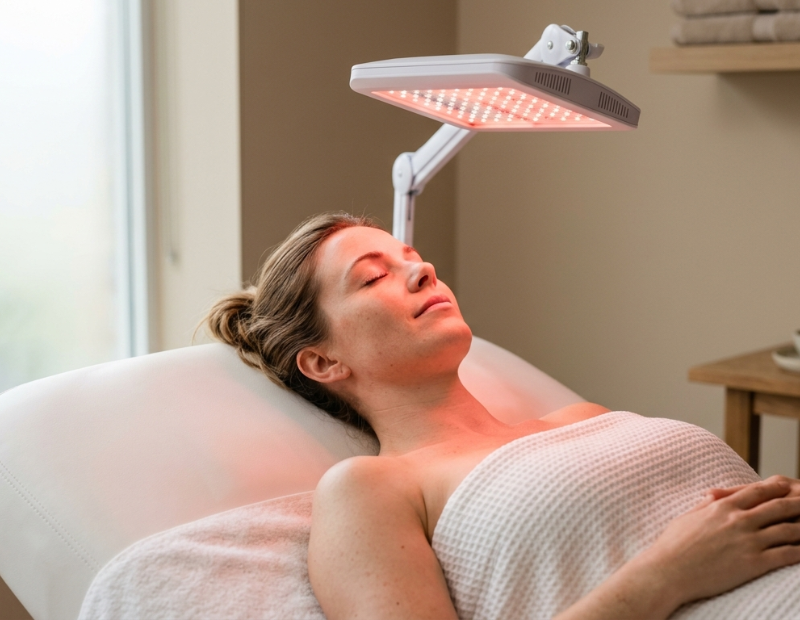
This guide breaks down LED skin therapy light the way we think buyers actually need it explained: not as a list of trendy colors, but as a framework for understanding what each wavelength is doing, what separates a well-engineered device from a decorative one, and how to choose a device that actually matches the skin concern you’re trying to address.
TL;DR
LED skin therapy light uses specific wavelengths of visible light — most commonly red, blue, and sometimes green or yellow/amber — to trigger different biological responses in skin cells, and the color isn’t cosmetic; it corresponds to a different depth of penetration and a different intended effect.
Red light (roughly 630–660nm) is the most researched wavelength for skin applications, generally associated with collagen stimulation, fine line appearance, and overall skin tone support, while blue light (around 415nm) targets acne-causing bacteria at the skin’s surface.
Device format matters as much as wavelength. A rigid mask, a flexible silicone mask, a flat panel, and a handheld wand all deliver light differently — fit and consistent skin distance affect real-world dose far more than most buyers realize.
Don’t judge a device by LED count alone. Irradiance (light intensity actually reaching the skin) and even distribution across the treatment area matter more than how many LEDs are visually packed into the mask or panel.
Combination devices adding EMS (electrical muscle stimulation) or RF (radiofrequency) alongside LED light are addressing different mechanisms entirely — muscle stimulation and skin tightening via heat, versus photobiomodulation via light — and buyers should understand these are separate technologies bundled together, not one enhancing the other automatically.
Session consistency matters more than session intensity. Most approaches to LED skin therapy rely on regular, shorter sessions over weeks, not occasional long or high-intensity sessions.
Eye protection matters for facial masks and panels, since many devices direct light close to or partially toward the eye area — check whether a device includes eye protection or eyewear cutouts designed with this in mind.
The most common buying mistake is choosing a device based on the number of light colors it offers rather than checking whether the specific wavelengths included, and their actual irradiance, match the skin concern being targeted.
What LED Skin Therapy Light Actually Does
LED skin therapy light — sometimes called LED phototherapy, photobiomodulation for skin, or simply light therapy skincare — uses specific wavelengths of red, blue, or other visible light to interact with skin cells without heat, needles, or chemical exfoliants. The mechanism most commonly cited is photobiomodulation: certain wavelengths are absorbed by mitochondria within skin cells, which can influence cellular energy production (ATP) and downstream processes associated with collagen synthesis, circulation, and inflammatory response, depending on the wavelength used.
This is distinct from photodynamic therapy (PDT), which pairs light with a topical photosensitizing agent to actively destroy targeted cells, typically under professional clinical supervision. LED skin therapy light, by contrast, works through direct light exposure on the skin’s own cells, without a photosensitizer — which is part of why it’s widely available as an at-home category, while PDT generally remains a clinic-administered treatment.
Understanding the Colors: What Each Wavelength Is Actually Doing

Red light (approximately 630–660nm). The most widely used and researched wavelength in LED skin therapy, red light penetrates to a moderate depth and is generally associated with supporting collagen production, improving the appearance of fine lines, and general skin tone and texture support. Most red light facial masks and panels center in this range.
Blue light (approximately 415nm). Blue light interacts primarily at the skin’s surface and is commonly associated with targeting the bacteria linked to acne breakouts, making it a frequent addition to devices marketed for blemish-prone skin.
Near-infrared light (approximately 830–850nm). Less common in purely cosmetic facial devices but increasingly included in combination panels, near-infrared penetrates deeper than red light, reaching further into the dermis, and is generally associated with deeper tissue support alongside the more surface-level effects of red light.
Green light (approximately 520nm). Occasionally included in multi-color devices, green light is often marketed in relation to skin tone evenness and reducing the appearance of discoloration, though it has a smaller body of dedicated research compared to red and blue light.
Yellow/amber light (approximately 590nm). Sometimes included in multi-color masks and generally positioned around skin-calming and redness-related concerns, again with a comparatively smaller research base than red and blue wavelengths.
A device offering “7 colors” or “4 colors” isn’t inherently better than a well-engineered single or dual-wavelength device — what matters is whether the specific wavelengths included are accurate, delivered at an effective irradiance, and relevant to the skin concern you’re actually trying to address, rather than the novelty of having more color options to cycle through.
Why Device Format Changes Real-World Results
Rigid Full-Face Masks

Hard-shell masks maintain a fixed shape and distance from the face, which can provide consistent geometry, but only if the mask fits the wearer’s face shape reasonably well — a mask that sits too far from certain facial contours (nose bridge, jawline, under-eye area) delivers less effective light to those specific zones compared to areas it sits flush against.
Flexible Silicone Masks
Silicone masks are designed to conform more closely to individual face shapes, which can improve consistency of skin contact and distance across the whole face, particularly for users whose face shape doesn’t match a rigid mask’s fixed geometry well. The trade-off is sometimes a different LED density or arrangement compared to rigid designs, so it’s worth checking irradiance data rather than assuming flexibility alone guarantees better performance.
Flat Panels
Panels used at a set distance from the face offer flexibility in session setup — they can also treat the neck, décolletage, or be angled for other body areas — but require the user to hold a consistent distance and position for the full session, since panels don’t maintain fixed contact the way a mask does.
Handheld Wands
Wands allow targeted, spot-specific treatment and can be moved to address particular areas of concern, but depend heavily on user technique — consistent speed, distance, and coverage — to deliver an even dose across the treated area, making them more operator-dependent than a full mask or panel.
Key Specifications to Evaluate
Wavelength accuracy. As with all LED-based light therapy devices, printed wavelength numbers are nominal. Reputable manufacturers can provide actual spectral output data confirming the true emission peak, which matters because the effects associated with each color are tied to fairly specific wavelength ranges.
Irradiance at skin contact. The light intensity that actually reaches the skin (commonly measured in mW/cm²) is a more meaningful performance indicator than total LED count or overall device wattage, since irradiance is what determines whether a session is actually delivering an effective dose within a reasonable session length.
LED density and even coverage. Gaps in LED placement or inconsistent spacing create uneven treatment across the face — some areas well-covered, others receiving significantly less light — which is more likely with cheaper, less carefully engineered devices regardless of stated LED count.
Comfort and wearability for repeated use. A mask or device that’s uncomfortable to wear for a full session, whether due to weight, heat buildup, or poor fit, is far less likely to be used consistently — and consistency is what drives results in photobiomodulation-based skincare more than any single session’s intensity.
Eye protection. Many facial devices direct light close to the eye area. Check whether a mask includes built-in eye protection, cutouts designed to avoid direct eye exposure, or comes with separate eyewear, since direct light exposure to the eyes is generally something to avoid regardless of wavelength.
Timer and program consistency. Built-in session timers and preset programs support the kind of regular, repeatable use that most LED skincare approaches depend on, reducing the guesswork around session length from one use to the next.
Combination technology clarity. Devices adding EMS (electrical muscle stimulation) or RF (radiofrequency) alongside LED light are combining genuinely separate technologies — EMS stimulates muscle contraction, RF uses heat to affect deeper skin layers, and LED light works through photobiomodulation. None of these mechanisms substitute for or automatically enhance the others; understanding what each component is actually doing helps set realistic expectations for a combination device rather than assuming “more technology” simply means “more effective.”
Matching LED Skin Therapy Light to Your Skin Concern
General anti-aging and fine lines — red light-focused devices, often combined with near-infrared, are the most common choice, generally associated with supporting collagen-related skin appearance over consistent use.
Acne and blemish-prone skin — blue light, sometimes combined with red light to also support the skin’s appearance during and after breakouts, is the most frequently used combination for this concern.
Uneven tone and mild discoloration — devices including green light alongside red light are commonly marketed toward this concern, though the research base for green light specifically is smaller than for red and blue.
Redness and general skin calming — yellow/amber-inclusive devices are sometimes chosen for this purpose, again with a comparatively limited dedicated research base relative to red and blue wavelengths.
Combination or multiple concerns — multi-color devices allowing you to select or cycle through wavelengths offer flexibility, provided each included wavelength is accurate and delivered at an effective irradiance rather than included primarily as a marketing feature.
How Often and How Long to Use LED Skin Therapy Devices
Consistency matters more than intensity in most approaches to LED skincare. Rather than a single long or high-powered session, most protocols favor shorter sessions used regularly — commonly several times a week over a period of weeks to months — allowing cumulative exposure to build rather than expecting a single session to produce a dramatic change. Following the specific manufacturer’s recommended session length and frequency for your device is the most reliable approach, since irradiance and design vary enough between devices that a universal time recommendation doesn’t apply evenly across all products.
Safety Considerations
LED skin therapy light is generally considered low-risk for most healthy adults when used as directed, but a few groups should consult a healthcare provider or dermatologist before starting a routine: people who are pregnant, individuals with photosensitivity disorders, anyone taking photosensitizing medications (including certain acne medications like isotretinoin, which can increase photosensitivity), people with active skin cancer or a relevant history in the treatment area, and anyone with an implanted electronic device where manufacturer guidance suggests caution.
Eye protection deserves particular attention for facial devices given the proximity to the eyes during use. This guide provides general educational information about how LED skin therapy light works and what to consider when choosing a device — it is not medical advice, and anyone with an existing skin condition or concern should consult a dermatologist or healthcare provider before starting a new light therapy routine.
Common Mistakes When Choosing an LED Skin Therapy Device
Choosing based on number of colors rather than accuracy and relevance. A device advertising many color options isn’t automatically more effective than one with fewer, well-engineered, clinically relevant wavelengths matched to your actual skin concern.
Assuming a mask fits all face shapes equally well. Rigid masks in particular can leave gaps at certain facial contours, reducing effective light delivery to those specific areas regardless of the device’s overall specifications.
Expecting rapid results from inconsistent use. Photobiomodulation-based skincare generally depends on cumulative, regular exposure over weeks, not occasional or one-off sessions.
Overlooking eye protection. Facial devices used close to the eyes warrant a device that specifically accounts for eye safety, rather than assuming general skin-safe design automatically extends to eye safety.
Misunderstanding combination technology. Assuming that EMS or RF features automatically make the LED light component more effective, when in fact each technology works through an entirely separate mechanism and should be evaluated on its own merits.
Frequently Asked Questions
What colors of LED skin therapy light are best for anti-aging? Red light (approximately 630–660nm) is the most commonly used and researched wavelength for anti-aging applications, often combined with near-infrared light for deeper tissue support, generally associated with collagen-related skin appearance improvements over consistent use.
Can LED skin therapy light help with acne? Blue light (around 415nm) is the wavelength most associated with targeting acne-causing bacteria at the skin’s surface, and is frequently combined with red light in devices marketed for blemish-prone skin.
Is a silicone LED mask better than a rigid one? Silicone masks generally conform more closely to individual face shapes, which can improve consistency of light delivery across facial contours, but the actual determining factor is the device’s LED density, irradiance, and fit for your specific face shape — not the material alone.
How long does it take to see results from LED skin therapy light? Most approaches rely on consistent use over several weeks to months rather than a single session, since photobiomodulation-based effects are generally cumulative. Following your specific device’s recommended frequency is the most reliable guide.
Do LED skin therapy masks need eye protection? Many facial masks and panels direct light close to the eye area, so checking for built-in eye protection, safe cutouts, or included eyewear is an important safety consideration before use.
What’s the difference between LED skin therapy light and PDT for skin treatment? LED skin therapy light works through direct photobiomodulation of skin cells without any added compound, commonly available as an at-home category. PDT (photodynamic therapy) pairs light with a photosensitizing agent applied to the skin to actively target cells, and is generally administered under professional clinical supervision rather than at home.
Conclusion: Choosing LED Skin Therapy Light Comes Down to Wavelength Accuracy and Consistent Use
The most effective LED skin therapy light device isn’t the one with the most color settings or the flashiest marketing — it’s the one whose specific wavelengths are accurate, whose irradiance is strong and even enough to deliver a genuine dose to the skin, and whose format actually fits your face and lifestyle well enough that you’ll use it consistently over weeks and months.
Before choosing a device, get clear on the skin concern you’re actually targeting, check whether the wavelengths included are relevant to that concern, and look past the headline color count to the details that determine real performance — irradiance, fit, eye protection, and build quality. If a device combines LED light with EMS or RF, understand that you’re evaluating three distinct technologies bundled together, not one that automatically strengthens the others.
Used thoughtfully and consistently, LED skin therapy light can be a genuinely useful addition to a skincare routine — the key is choosing a device engineered around real wavelength accuracy and consistent, comfortable use, rather than one chosen for its spec sheet alone.