


Red light therapy belts and wraps have become the fastest-moving format in the home wellness market — cheaper to ship than a panel, easier to use than a mat, and targeted enough to sit directly on a knee, a lower back or a shoulder. They are also the format where published specifications diverge most wildly from measured reality.
Key takeaways
- Effective wearable devices combine 660 nm red and 850 nm near-infrared light; red works on skin and superficial tissue, NIR reaches deeper into muscle, joint capsule and tendon.
- Published irradiance figures between brands are not directly comparable — the measurement distance, sensor type and whether NIR is included all change the number by a factor of two or more.
- The specification that actually determines a session is dose (J/cm²) = irradiance (mW/cm²) × time (s) ÷ 1000. Peer-reviewed photobiomodulation work puts the useful window at roughly 1–20 J/cm² at the target tissue, on a biphasic curve where more is not better.
- For brand owners, the sourcing decisions that matter are LED binning, driver quality, thermal management and documented compliance — not diode count on the marketing page.
- SINOCO manufactures wellness wraps, belts, pads, panels and mats under ISO 13485 and ISO 9001 in a 10,000 m² Shenzhen facility, with OEM and ODM programmes for brand owners, clinics and distributors.

What a Red Light Therapy Belt Actually Is
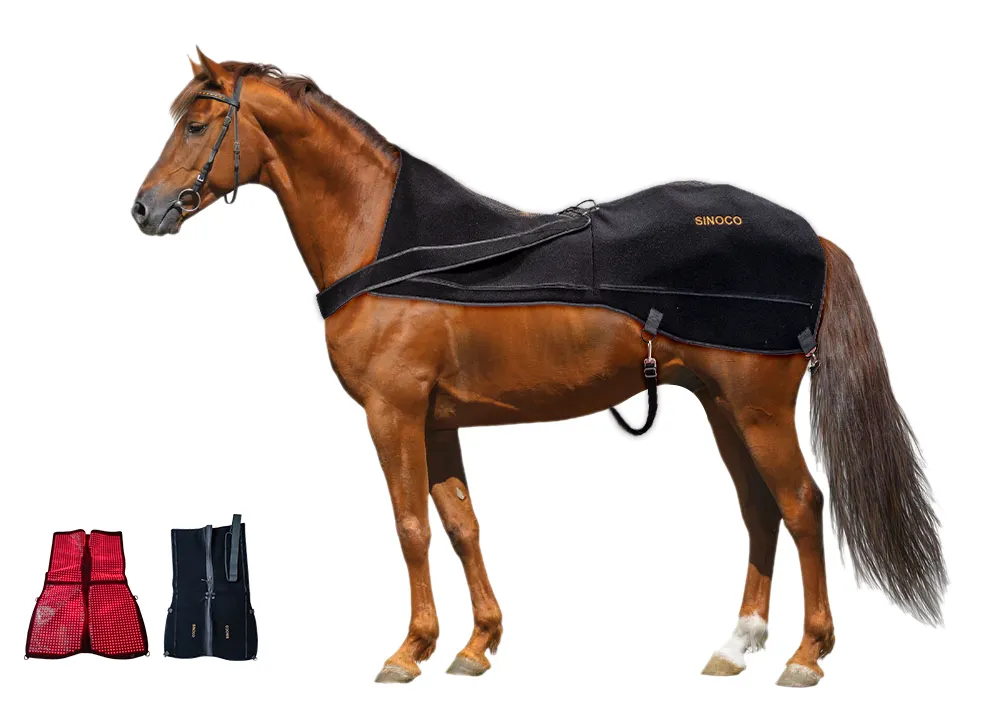
A red light therapy belt is a flexible textile array of LEDs — typically a mix of 660 nm red and 850 nm near-infrared emitters — mounted on a substrate that straps against the body. It is one member of a family of wellness light therapy form factors, and the differences between them are not cosmetic. Coverage area, contact pressure, LED-to-skin distance and cooling all change with the shape, and each of those changes the delivered dose.
| Form factor | Typical coverage | Best suited to | Trade-off |
|---|---|---|---|
| Belt (waist) | 50–90 cm strap, 20–40 cm active zone | Lower back, abdomen, waist | Fixed curvature limits use on limbs |
| Wrap (limb) | 15–30 cm active zone | Knee, elbow, shoulder, calf | Small area means longer total session for multiple sites |
| Pad (flexible) | 30×60 cm or larger | Back, thigh, multi-site | Needs manual positioning and a strap or body weight |
| Panel (rigid) | 30×60 cm to 90×200 cm | Whole-front or whole-back exposure at distance | Not portable; irradiance falls with distance |
| Mat or blanket | Full body | Whole-body sessions, spa and studio use | Highest cost and power draw; contact-only geometry |
| Wand or handheld | 5–15 cm² | Spot treatment, face, hard-to-reach sites | Operator-dependent dose |
Contact devices — belts, wraps, pads and mats — sit at or near zero distance from skin, so they deliver comparatively high irradiance from modest electrical power. Panels are used at 15–45 cm, where the inverse-square relationship means irradiance drops steeply with distance. This is the single most common source of confusion when buyers compare a 100 mW/cm² contact wrap against a 100 mW/cm² panel: the panel figure is almost always quoted at the emitter surface, not at the distance a person actually uses it.

The Four Specifications That Decide Whether a Device Works
1. Wavelength: 660 nm and 850 nm, and why the pair matters
Photobiomodulation depends on light being absorbed by chromophores in the cell — principally cytochrome c oxidase in the mitochondrial respiratory chain. Absorption is wavelength-specific, which is why the industry has converged on two bands rather than “red light” generally.
- 630–660 nm (red) — strong absorption, shallow penetration. Acts mostly on skin, superficial fascia and the outer few millimetres of tissue.
- 800–850 nm (near-infrared) — weaker absorption per photon but far better penetration through skin, fat and muscle, which is what makes it relevant to joints, tendon and deeper muscle bellies.
- 810 nm — used by some manufacturers alongside 850 nm because it sits near a secondary absorption peak of cytochrome c oxidase.
- 940 nm and above — cheaper diodes, widely used in low-cost imports, but absorption by water rises and the photobiomodulation evidence base is thinner.
A practical consequence for buyers: a device advertising “infrared” without naming the wavelength is frequently using 940 nm, because those emitters cost less. Insist on the nanometre figure and the tolerance band, typically ±10 nm, on the specification sheet.
2. Irradiance: the number everyone quotes and nobody measures the same way
Irradiance — optical power density, in mW/cm² — is the headline specification in nearly every listing. It is also the least standardised. Manufacturer-published figures for comparable 2026 consumer wraps span roughly 18 mW/cm² to 120 mW/cm², a near seven-fold range for products that look and behave similarly in use.
| Brand and model | Stated wavelengths | Stated irradiance | Notable claim |
|---|---|---|---|
| Megelin LED Contour Belt | 660 nm red, 850 nm NIR | up to 120 mW/cm² | 360 red plus 720 NIR emitters |
| Hooga red light therapy wrap | 660 nm, 850 nm | 65 mW/cm² | 3-year warranty |
| Bestqool belt | 660 nm, 850 nm | around 45 mW/cm² | 110 dual-chip LEDs, 1-year warranty |
| Infraredi body wrap | 660 nm, 880 nm | not consistently published | 60 dual-chip LEDs |
| Mito Red Light MitoQUAD belt | 630, 660, 810, 850 nm | up to 18 mW/cm² at contact | four-wavelength array |
| Novaa Light Pad XL | 660 nm, 850 nm | not consistently published | high diode count |
Three variables explain most of that spread, and none of them are usually disclosed:
- Measurement distance. A reading taken with the sensor touching the lens is dramatically higher than one taken at 5 cm. Contact devices are legitimately measured at contact — but the number cannot then be compared against a panel specification quoted at 15 cm.
- Whether NIR is counted. Many consumer-grade solar power meters have poor or no response above 800 nm. A brand using such a meter under-reports; a brand using a calibrated spectroradiometer and summing red plus NIR reports a higher figure for identical hardware.
- Peak versus average. Pulsed or duty-cycled drivers can be quoted at instantaneous peak. Average irradiance over the session is the figure that determines dose.
This is not an accusation of bad faith across the industry — it is a genuine absence of a consumer-facing measurement standard. The practical response, for a brand owner or a distributor, is to stop treating published irradiance as a comparison metric and to commission your own measurement: specify the distance, the sensor and the spectral range in your purchase agreement, and require a test report per production lot.
3. Dose: the calculation that actually governs a session
Irradiance alone tells you nothing about outcome. The quantity that matters is fluence, or energy density, in joules per square centimetre:
Dose (J/cm²) = Irradiance (mW/cm²) × Time (seconds) ÷ 1000
A wrap delivering 60 mW/cm² for 10 minutes therefore delivers 60 × 600 ÷ 1000 = 36 J/cm² at the skin surface. A device delivering 18 mW/cm² needs roughly 33 minutes to reach the same surface dose.
The published photobiomodulation literature — most accessibly summarised in Huang and colleagues’ review of the biphasic dose response in low level light therapy — describes an inverted-U relationship: response improves as dose rises toward an optimum, then falls away as dose continues to increase. Commonly cited working ranges are 1–20 J/cm² delivered to the target tissue, with irradiances of roughly 5–50 mW/cm² typical for stimulation and healing endpoints. Surface doses on LED contact devices are routinely higher than tissue doses, because attenuation through skin and subcutaneous fat is substantial.
Two implications follow, and both are commercially inconvenient for the “more power is better” marketing position:
- A very high-irradiance device does not shorten the path to a better outcome; it shortens the path to overshooting the optimum.
- Session guidance in the user manual is a safety and efficacy control, not a formality. A device rated at 120 mW/cm² with a manual that still says “use for 20 minutes” is delivering 144 J/cm² at the surface, well beyond the range most published protocols use.

4. Coverage, uniformity and thermal behaviour
A specification sheet that lists diode count without active area is incomplete. What a buyer needs is:
- Active area in cm², not overall product dimensions — the strap, seam allowance and controller pocket are not treatment area.
- Uniformity, expressed as the ratio of minimum to maximum irradiance across the active area. Cheap arrays with widely spaced diodes produce hot spots and dead zones; a ratio better than 0.7 is a reasonable target for contact devices.
- Surface temperature rise under continuous operation. Contact devices trap heat. Without a thermistor and a thermal cut-out, a wrap held against skin under a strap can exceed comfortable temperatures, and users misread that warmth as therapeutic dose.
- Flex cycle life for textile devices — LED solder joints on a flexible PCB fail long before the diodes do if the substrate and strain relief are not designed for repeated bending.
Compliance: What Actually Applies to a Wellness Wrap
This is where sourcing decisions carry the most risk, and where the difference between a competent manufacturer and a trading company becomes visible. In the United States, photobiomodulation devices making medical claims are Class II and require a 510(k) premarket notification, regulated under parts of 21 CFR 878 and 890; the FDA maintains a dedicated guidance document for photobiomodulation device 510(k) submissions. Products intended only for general wellness use and presenting low risk may fall outside that scope — but the boundary is set by the claims you make, not by the hardware.
In practice, a brand owner selling a belt with general wellness positioning and a brand owner selling the same belt for “temporary relief of minor muscle and joint pain” are in two different regulatory situations with an identical bill of materials.
| Standard or document | What it covers | Why it matters to you |
|---|---|---|
| IEC 60601-1 | General electrical safety for medical electrical equipment | Baseline for any mains- or battery-powered body-contact device |
| IEC 60601-2-57 | Particular requirements for non-laser light source equipment | The specific standard for LED therapeutic light sources |
| IEC 62471 | Photobiological safety of lamps and lamp systems | Risk group classification, including infrared hazard |
| ISO 10993 | Biocompatibility of materials in body contact | Required for skin-contact textiles and silicone |
| ISO 13485 | Medical device quality management system | Evidence the factory runs design control, not just assembly |
| IEC 62133 | Lithium cell and battery safety | Applies to every cordless belt and wrap |
| FCC Part 15 and EMC | Electromagnetic compatibility | Required for US and EU market entry |
| Test report per lot | Wavelength, irradiance, uniformity, temperature | Your only defence against silent BOM substitution |
The last row is the one most often omitted and most often regretted. Silent component substitution — a cheaper LED bin, a different driver IC, a thinner copper layer — is a well-known failure mode in this category. A per-lot optical and thermal test report, contractually required, is what converts a specification from a marketing claim into an obligation.
Sourcing a Wellness Light Therapy Line: What to Lock Down
OEM versus ODM in this product category
Both terms get used loosely. In practice:
- OEM — you bring the design, or a substantially defined specification, and the factory builds to it. You own the tooling and the design file. Higher up-front cost, full control, genuine differentiation.
- ODM — you select from the factory’s existing platforms and customise wavelength mix, housing colour, textile, controller UI, packaging and firmware limits. Much faster and cheaper to launch; the base platform may also be sold to others.
- Private label — the lightest option: an existing SKU with your logo and packaging. Fastest route to market, no defensibility.
For a first line, an ODM platform with a locked wavelength and irradiance specification, your own textile and strap design, and exclusivity on a specific configuration is usually the right balance of speed and differentiation. Our detailed breakdown of OEM versus ODM red light therapy programmes covers where each model makes commercial sense.
The specification checklist
- Optical — wavelengths with tolerance, per-diode optical power, active area, irradiance at contact and at 5 cm, uniformity ratio.
- Electrical — driver topology, constant-current regulation, ripple, battery chemistry and capacity, charge circuit protection, standby draw.
- Thermal — surface temperature after 30 minutes at maximum output in still air at 25 °C, thermistor placement, cut-out threshold.
- Mechanical — substrate, flex cycle target, strap and closure type, ingress protection, cleanability.
- Firmware — session timer defaults and maximum, intensity steps, auto-shutoff, whether the user can override the maximum dose.
- Documentation — test reports, certificates, user manual content, labelling artwork, and who owns the declaration of conformity.
- Commercial — MOQ, tooling amortisation, lead time, sample lead time, packaging, and who holds the regulatory registration.
Realistic commercial parameters
For flexible wearable devices in 2026, typical ODM programmes run a minimum order of a few hundred units for an existing platform, rising where custom tooling is involved; sample lead times of two to four weeks; and production lead times of roughly four to seven weeks after sample approval. Custom injection tooling for a controller housing adds both cost and a further four to six weeks. A brand owner planning a launch should build the regulatory documentation timeline into the schedule from the start rather than treating it as a shipping-week task.
How SINOCO Approaches Wellness Light Therapy Manufacturing
SINOCO has been developing and manufacturing LED and red light therapy products for over 20 years from a 10,000 m² facility in Shenzhen, with certification to ISO 9001, ISO 13485, ISO 14001 and ISO 45001 and more than 30 national patents. The wellness light therapy range covers the full set of form factors discussed above — belts, knee and elbow wraps, flexible pads, rigid panels and full-body mats — which means a brand can build a coherent multi-SKU line on shared electronics rather than sourcing each format from a different supplier.
What that looks like in practice for an OEM or ODM customer: wavelength and irradiance specified and verified rather than inherited from a catalogue page, in-house tooling and assembly with AOI inspection, 100% outgoing inspection before shipment, and turnkey support from drawing and industrial design through incoming material QC, assembly, packing and shipping.
Building or re-sourcing a wellness light therapy line? Talk to the SINOCO engineering team about wavelength selection, irradiance targets and the compliance pathway for your market, or browse the full wellness product range.
Frequently Asked Questions
What is the best wavelength for a red light therapy belt?
Most evidence-based devices combine 660 nm red light with 850 nm near-infrared. The 660 nm band is well absorbed by superficial tissue, while 850 nm penetrates further into muscle, tendon and joint capsule. Devices that advertise only “infrared” without a stated nanometre figure often use cheaper 940 nm emitters, which have a thinner photobiomodulation evidence base.
How many mW/cm² does a red light therapy belt need?
There is no single correct figure, because irradiance only matters in combination with time. Published photobiomodulation ranges put useful irradiance at roughly 5 to 50 mW/cm² for stimulation and healing endpoints, with a target dose of about 1 to 20 J/cm² at the tissue. A contact wrap in the 30 to 70 mW/cm² range reaches sensible surface doses in 5 to 15 minutes.
Why do published irradiance figures vary so much between brands?
Because there is no consumer-facing measurement standard. The stated number changes with measurement distance, whether the sensor responds to near-infrared at all, and whether peak or average output is reported. Two identical devices can honestly be listed at 25 and 60 mW/cm² depending on method, which is why buyers should commission independent measurement rather than compare listings.
Is a higher-power red light therapy device always better?
No. Photobiomodulation follows a biphasic dose response: benefit increases with dose up to an optimum and then declines. A very high-irradiance device simply reaches that optimum faster, and makes overshooting easier if session times are not adjusted downward to match.
Does a red light therapy belt need FDA clearance?
It depends entirely on the claims made. A device marketed for general wellness with low risk may fall outside the FDA’s photobiomodulation 510(k) guidance, while the same hardware marketed for pain relief or a specific medical indication is a Class II device requiring a 510(k) premarket notification. The claim defines the pathway, not the hardware.
What is the difference between a red light therapy belt, pad and panel?
A belt is a strap-mounted contact array shaped for the waist or torso; a pad is a larger flexible contact array positioned manually; a panel is a rigid array used at a distance of roughly 15 to 45 cm. Contact formats deliver higher irradiance from lower electrical power, while panels cover more of the body at once but lose intensity rapidly with distance.
What MOQ and lead time should I expect for an OEM red light therapy belt?
For an existing ODM platform with custom branding, textile and packaging, minimum orders typically start in the low hundreds of units, with samples in two to four weeks and production in roughly four to seven weeks after sample sign-off. Fully custom tooling adds cost and a further four to six weeks.
How do I stop a supplier from substituting cheaper components after the first order?
Write the optical and thermal specification into the purchase agreement, name the approved LED bin and driver part numbers, and require a per-lot test report covering wavelength, irradiance, uniformity and surface temperature. Golden-sample retention and a right to third-party verification give that requirement teeth.
Conclusion
The wearable end of the red light therapy market is crowded, and the specification sheets are, for now, effectively unregulated. That is a risk for brand owners buying on headline numbers — and an opportunity for those willing to specify properly. Fix the wavelengths, define irradiance with a measurement method attached, calculate the dose your session guidance actually delivers, and require lot-level evidence that the hardware still matches the specification six orders later.
Do that, and the difference between a product that earns repeat purchases and one that quietly accumulates returns becomes a manufacturing decision rather than a marketing one.
This article is intended for product, sourcing and brand teams. It is not medical advice. Device claims must be aligned with the regulatory requirements of each target market.