



Red light therapy has moved from clinic treatment rooms into home wellness routines, and wraps are the format driving a lot of that shift. Unlike a flat panel you have to sit or stand in front of, a red light wrap straps directly onto the body — knee, shoulder, back, or waist — and follows the shape of the joint or muscle it’s targeting. That difference sounds small, but it changes almost everything about how consistently the light actually reaches the tissue you’re trying to treat.
Red Light Wraps: Complete Buyer’s Guide | Sinoco

This guide is written for anyone comparing red light wraps for the first time and trying to understand what actually separates a well-designed one from a device that just happens to light up. It’s not a product pitch — it’s the framework for understanding wavelength, dose, fit, and use case that most product pages skip entirely.
TL;DR
Red light wraps deliver red (commonly 660nm) and near-infrared (commonly 850nm) light directly against the body in a flexible, contoured format, which allows more consistent skin contact than a flat panel positioned at a distance.
The wavelength combination matters: 660nm red light is absorbed more superficially and is generally associated with skin-level effects, while 850nm near-infrared penetrates deeper, reaching muscle and joint tissue — most quality wraps combine both rather than using a single wavelength.
Fit and flexibility determine real-world effectiveness more than total LED count. A wrap that doesn’t sit flush against curved areas like the knee, shoulder, or elbow loses significant light intensity at the skin surface due to the gap created by an ill-fitting shape.
Irradiance (light intensity delivered to the skin) matters more than the number of LEDs advertised — a wrap with fewer, well-placed, higher-quality diodes can deliver a more effective and even dose than one with many densely packed but poorly driven LEDs.
Session duration and consistency matter more than any single session’s intensity — most red light therapy protocols rely on programs used regularly over weeks, not a single high-powered session.
Battery-powered wraps offer mobility and ease of use for larger muscle groups and joints, while corded wraps typically sustain more consistent power output over longer sessions, which is a practical trade-off worth considering based on how and where you plan to use the device.
Not everyone is a good candidate for at-home red light therapy — people who are pregnant, have photosensitivity conditions, are on certain photosensitizing medications, or have active skin cancer or other serious medical conditions should consult a healthcare provider before use, since this guide provides general education, not medical advice.
The most common buying mistake is comparing wattage or LED count across products without checking wavelength accuracy, irradiance at skin contact, and whether the wrap’s shape actually fits the body area it’s marketed for.
What Red Light Wraps Actually Are

A red light wrap is a flexible, body-conforming device embedded with LEDs that emit red and/or near-infrared light, designed to be strapped or wrapped directly around a specific body area — most commonly the knee, elbow, shoulder, waist, back, or a full limb — rather than positioned at a distance the way a standing panel or overhead light is used.
This category sits within the broader field of photobiomodulation (also called low-level light therapy or LLLT), which uses specific wavelengths of light to interact with mitochondria in cells, generally understood to influence ATP production and cellular signaling pathways associated with circulation and tissue-level recovery processes. It’s a distinct mechanism from photodynamic therapy (PDT), which requires an added photosensitizing agent — red light wraps work through direct light exposure alone, with no topical or systemic compound involved.
The wrap format exists specifically to solve a positioning problem that flat panels struggle with: joints and limbs are curved, and light intensity drops off sharply with distance and angle. A rigid panel aimed at a knee from even a few inches away delivers meaningfully less usable light to the sides and back of the joint than a wrap that maintains close, consistent contact around the entire curved surface.
The Wavelengths Behind Red Light Wraps
660nm (red light) sits at a wavelength commonly associated with more superficial tissue interaction — skin, and structures close to the surface. This is the wavelength most frequently referenced for skin-focused applications and surface-level recovery support.
850nm (near-infrared) penetrates further into tissue, reaching deeper toward muscle and joint structures, which is why it’s the wavelength most associated with deeper recovery and joint-focused applications.
Most well-designed red light wraps combine both wavelengths in a single device, since the areas commonly targeted — knees, shoulders, backs, elbows — involve both surface skin and deeper muscle or joint tissue. A single-wavelength wrap limits the depth of tissue interaction to whichever band it emits, which is worth checking closely if you’re comparing products marketed for a specific joint or deep-muscle use case.
Why Fit and Contour Matter More Than Most Buyers Expect
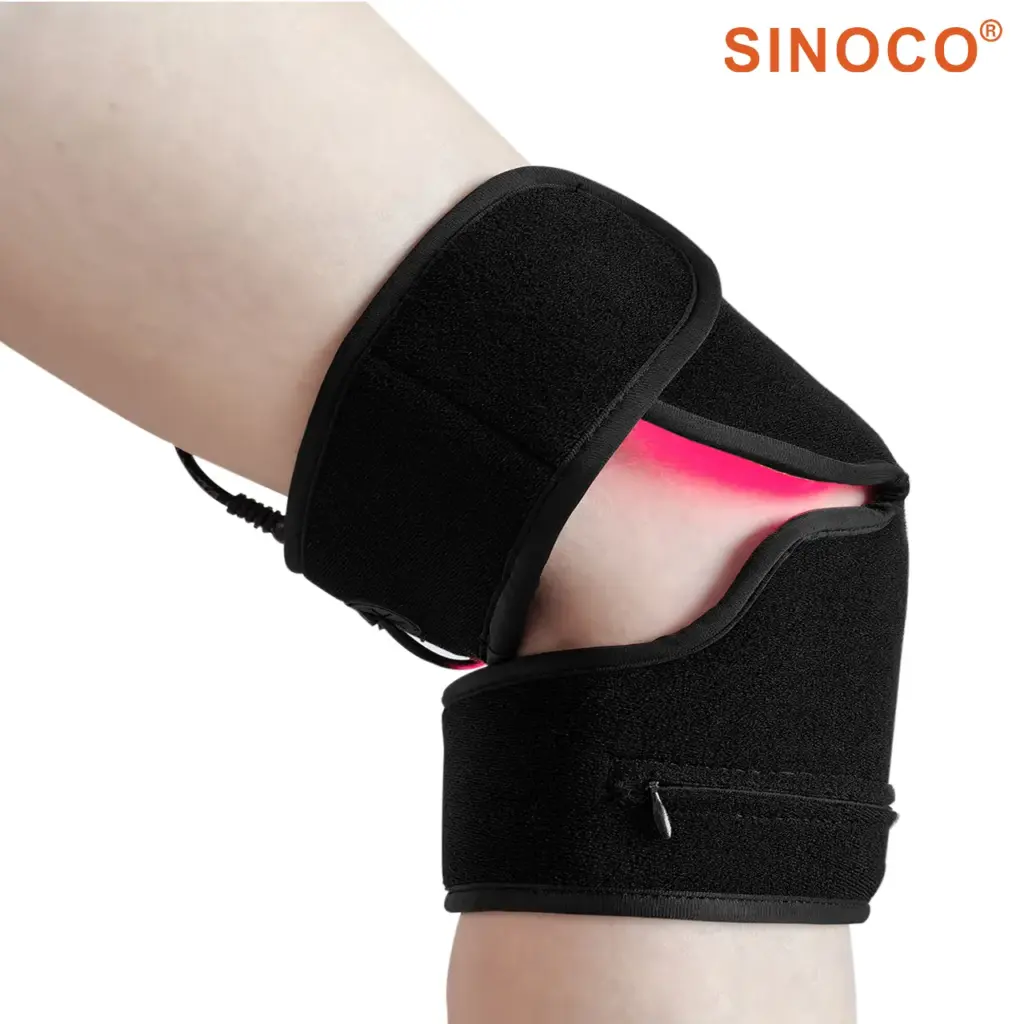
Because light intensity diminishes rapidly with distance and drops off further when hitting a surface at an angle rather than directly, the physical shape of a wrap has an outsized effect on how much usable light actually reaches the skin. A wrap engineered specifically for a knee — with contouring that follows the joint’s curve on both sides — maintains far more consistent skin contact than a generic flat panel bent awkwardly around the same joint.
This is why category-specific wraps (knee and elbow wraps, shoulder wraps, waist and back belts, full-body blankets) tend to outperform generic one-size-fits-all panels for targeted use, even when the underlying LED specifications are similar. When comparing wraps, it’s worth checking whether the product is genuinely designed and shaped for the body area you intend to use it on, rather than a general flexible pad marketed broadly across many use cases.
Key Specifications to Understand Before Buying
Wavelength accuracy. As with any LED-based light therapy device, the wavelength printed on a product listing is nominal. Quality manufacturers can provide actual spectral output data showing the true emission peak, which matters because the therapeutic wavelength ranges are relatively specific — a device drifting meaningfully off 660nm or 850nm may not deliver the same tissue interaction the marketed wavelength implies.
Irradiance at skin contact. This is the light intensity actually delivered to the skin, typically measured in mW/cm². A wrap’s total LED count or wattage says little on its own — what matters is how much usable light reaches the skin surface when the wrap is worn as intended, which depends on LED spacing, driver output, and how snugly the wrap fits the target area.
Even distribution across the wrap surface. Larger wraps (waist belts, back wraps, blankets) need consistent LED spacing to avoid hot and cold zones — areas of the body receiving a meaningfully different dose within the same session simply due to uneven LED placement.
Flexibility and material quality. A wrap needs to flex with movement and body contour without LEDs cracking, disconnecting, or creating pressure points, especially for continued regular use over months or years. Material quality and construction durability are often underweighted in comparison to LED specs alone.
Strap and closure design. Adjustable straps that allow a snug, consistent fit across different body sizes and shapes directly affect how much of the wrap’s surface maintains proper skin contact throughout a session — a wrap that shifts or gaps during use loses effectiveness regardless of its underlying LED quality.
Power source: battery vs. corded. Battery-powered wraps offer mobility, letting you move around during a session, which suits larger muscle groups, backs, and situations where sitting still for the full session isn’t practical. Corded wraps typically maintain more consistent power delivery over longer sessions and avoid the need for recharging, which matters for anyone using a wrap daily as part of a consistent routine.
Timer and intensity controls. Built-in session timers help maintain consistent, repeatable session lengths, which matters more for red light therapy than a single intense session, since most usage approaches rely on regular, repeated exposure over time rather than one high-intensity session.
Heat output alongside light. Some wraps combine red/NIR light with mild heat, which can feel more immediately soothing but is a different mechanism than the light therapy itself — worth understanding as a separate feature rather than assuming the warmth is what’s delivering the light therapy effect.
Common Applications for Red Light Wraps
Knee and elbow wraps are shaped to contour around the joint, commonly used to support comfort and mobility in areas prone to stiffness or overuse, particularly among people who are physically active or managing joint discomfort associated with aging or repetitive strain.
Shoulder wraps address a joint with a wide range of motion and irregular shape, requiring a wrap design that can maintain contact across the curve of the shoulder without shifting during normal movement.
Waist and back belts cover a larger, relatively flat surface area, commonly used to support lower back comfort and general muscular tension relief, and often benefit from wider coverage and adjustable strap systems to accommodate different body sizes.
Full-body blankets and mats extend the wrap concept to cover larger portions of the body at once, suited to general full-body relaxation and recovery use rather than a single targeted joint or muscle group.
Specialized wraps for specific conditions, such as those marketed for diabetic foot and leg support, are designed with the specific anatomy and sensitivity considerations of that use case in mind — anyone considering a wrap for a diagnosed medical condition like diabetic neuropathy should consult their healthcare provider first, since individual circulation and sensation considerations vary significantly and a wrap is not a substitute for medical treatment or advice.
How to Choose the Right Red Light Wrap for Your Use Case
Before comparing specific products, it helps to clarify a few things about your own situation:
- Which specific body area do you primarily want to target, and does the wrap’s shape genuinely match that area rather than being a generic flexible pad?
- Do you need mobility during a session (favoring battery power) or are you comfortable sitting still for a fixed session length (where corded power may offer more consistent output)?
- Is this for general wellness and recovery support, or are you managing a diagnosed medical condition that should involve a healthcare provider’s input before starting any at-home light therapy routine?
- Can the manufacturer provide actual spectral and irradiance data, or only marketing language about wavelength and LED count?
- Does the wrap’s strap and closure system accommodate your body size with a genuinely snug, consistent fit rather than a loose, one-size-fits-most approximation?
Safety Considerations Worth Understanding
Red light and near-infrared wraps are generally considered low-risk for healthy adults when used as directed, but a few groups should exercise particular caution and consult a healthcare provider before use: people who are pregnant, individuals with photosensitivity disorders, anyone taking photosensitizing medications, people with active skin cancer or a history of skin cancer in the treatment area, and anyone with an implanted electronic device where manufacturer guidance advises caution around electronic wearables.
Eye protection is also worth considering for wraps used near the face or that may direct light toward the eyes during positioning, since direct, prolonged light exposure to the eyes is generally advised against regardless of wavelength.
This guide is intended as general educational information about how red light wraps work and what to look for when choosing one — it is not medical advice, and it does not diagnose or recommend treatment for any specific condition. Anyone using a red light wrap to manage a diagnosed medical condition, chronic pain, or an injury should do so under the guidance of a qualified healthcare provider.
Common Mistakes When Choosing a Red Light Wrap
Comparing LED count instead of irradiance and fit. A higher LED count doesn’t guarantee more effective light delivery if the wrap doesn’t maintain snug, consistent contact with the target area.
Buying a generic flat pad for a curved joint. Knees, elbows, and shoulders lose significant effective light exposure when the wrap doesn’t contour to the joint’s shape, regardless of how strong the LEDs themselves are.
Expecting results from occasional, inconsistent use. Most approaches to red light therapy rely on regular, repeated sessions over weeks, not a single intensive session, so consistency matters more than session intensity.
Ignoring wavelength combination for the intended use case. A single-wavelength device limits the depth of tissue interaction — checking whether a wrap combines both red and near-infrared light matters if you’re targeting both skin-level and deeper muscle or joint concerns.
Skipping the safety conversation for existing medical conditions. At-home light therapy devices are generally low-risk for healthy adults, but anyone managing a diagnosed condition should confirm with a healthcare provider that a wrap is appropriate for their specific situation before starting regular use.
Frequently Asked Questions
What wavelengths do red light wraps typically use? Most quality red light wraps combine 660nm red light, associated with more superficial tissue interaction, with 850nm near-infrared light, which penetrates deeper toward muscle and joint tissue — together covering both surface and deeper areas commonly targeted by wrap-style devices.
How are red light wraps different from red light panels? Panels are typically flat and used at a fixed distance from the body, while wraps are flexible and contoured to sit directly against curved body areas like knees, shoulders, or the back, generally maintaining more consistent skin contact and light delivery for targeted joint and muscle areas.
How often should red light wraps be used? Usage patterns vary by product and intended purpose, but most approaches favor regular, shorter sessions over weeks rather than infrequent, longer sessions. Following the specific manufacturer’s session length and frequency guidance for your device is the most reliable approach.
Are red light wraps safe to use every day? For most healthy adults, red light wraps are generally considered low-risk for regular use following manufacturer guidance, but anyone pregnant, managing a photosensitivity condition, taking photosensitizing medication, or with a relevant medical condition should consult a healthcare provider before establishing a regular routine.
Do red light wraps work as well as clinical light therapy equipment? At-home wraps are generally designed for a lighter, ongoing wellness routine, while clinical equipment typically offers higher irradiance and more precise, programmable dosing under professional supervision. The right choice depends on the goal — general at-home recovery support versus a specific, supervised clinical protocol.
What should I check before buying a red light wrap? Look for actual wavelength and irradiance data rather than marketing claims alone, confirm the wrap’s shape genuinely fits your intended body area, and check strap adjustability, build quality, and whether the power source (battery or corded) matches how you plan to use it.
Conclusion: Choosing the Right Red Light Wraps Comes Down to Fit, Wavelength, and Consistency
The best red light wraps aren’t necessarily the ones with the highest advertised LED count or the boldest marketing claims — they’re the ones engineered to actually fit the body area you’re targeting, deliver accurate 660nm and 850nm wavelengths with real, verifiable irradiance at the skin, and hold up to regular, consistent use over months of a genuine wellness routine.
Before buying, look past the headline specs and ask the questions that actually predict real-world performance: does this wrap’s shape match my target area, is the wavelength data verifiable, and does the strap system maintain a snug, even fit across a full session. And if you’re managing a specific medical condition rather than general wellness and recovery support, loop in a healthcare provider before making at-home light therapy part of your routine.
Used thoughtfully and consistently, a well-chosen red light wrap can be a practical, low-effort addition to a recovery or wellness routine — the key is choosing one built around your specific body area and use case, not just the one with the most impressive-looking spec sheet.